
There has been much talk of how performance vehicles earn their place in the pantheon of greats now seemingly everything has moved towards electric motors and battery packs.
Granted, most manufacturers have nailed the straight-line performance stuff, with Tesla proving you can make an EV go ballistically fast many moons ago, but actually making an EV fun and engaging to drive? That’s still up for debate.
Anything with a monstrous battery pack stashed somewhere under the body is going to be heavy and disguising that mass is no mean feat. Engineers have the unenviable task of balancing everyday performance and range, while keeping things lithe… and on-budget.
However, EV technology is improving. Batteries are becoming lighter, more energy dense, while major steps have been made in boosting powertrain efficiencies.
Now, automakers don’t have to opt for the biggest packs, as software is able to eke more miles out of each charge and refuelling stops are now shorter thanks to improvements in the charging network.
Perhaps that’s why we are now witnessing the rebirth of the humble hot hatch — arguably the final word in everyday performance thrills.
“Peugeot says the E-208 GTi offers 182bhp per tonne”
Here we have a specimen that can be used to tackle the weekly shop, ferry kids to school and breeze the daily commute, all while returning reasonable fuel economy… or miles per kilowatt in modern motoring parlance.
The Volkswagen Golf GTI, Renault’s revered RS badge, Vauxhall’s VXR and Peugeot’s GTi — an insignia that hardly needs any introduction.
Whether you’re old enough to remember the original 604 GTi of the 80s, or the more recent 308 GTi, Peugeot has serious motorsport pedigree and success translating those achievements into playful road cars.
Then there’s the 205 GTi, the car that Peugeot’s debut electric hot hatch arguably draws most inspiration from.
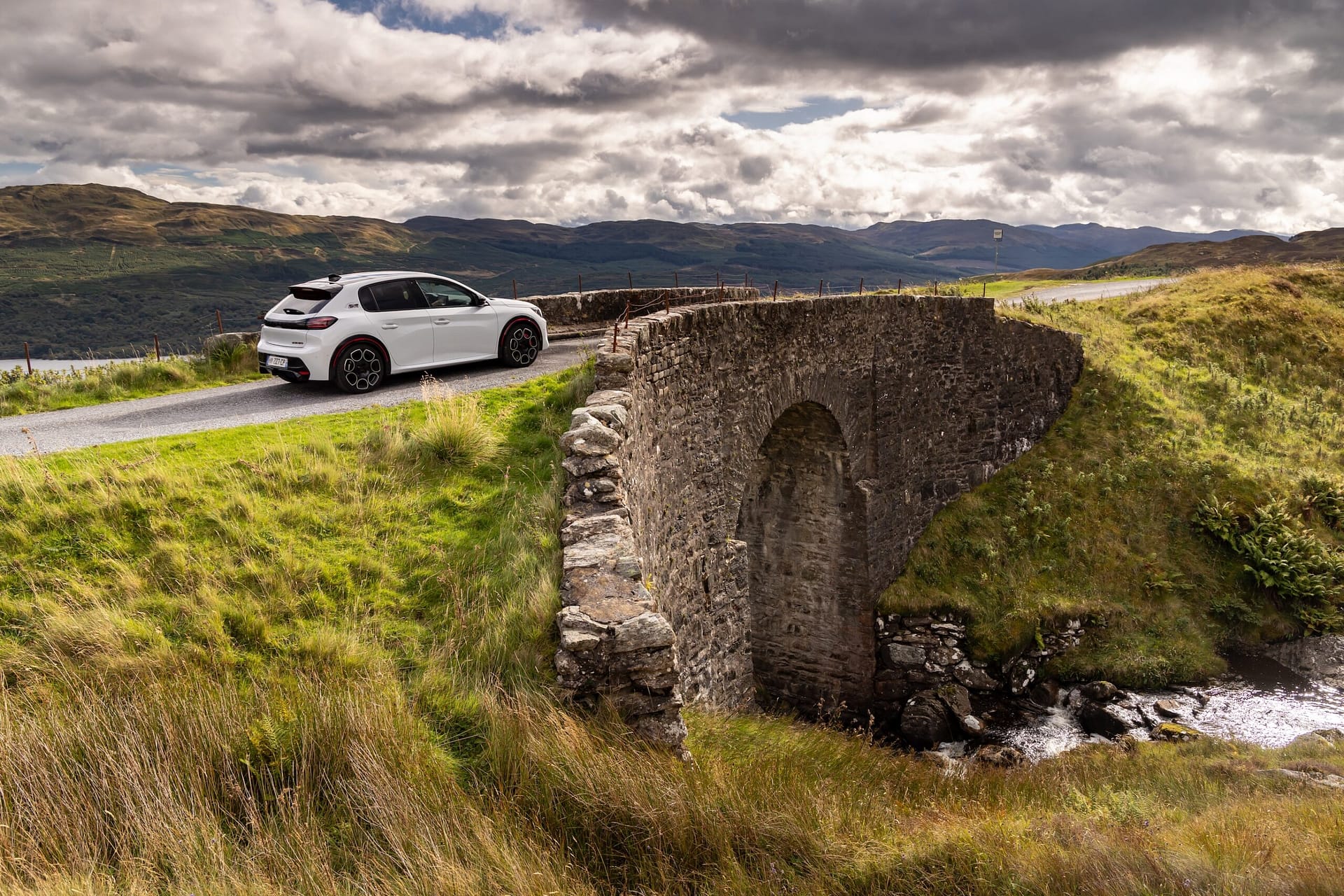
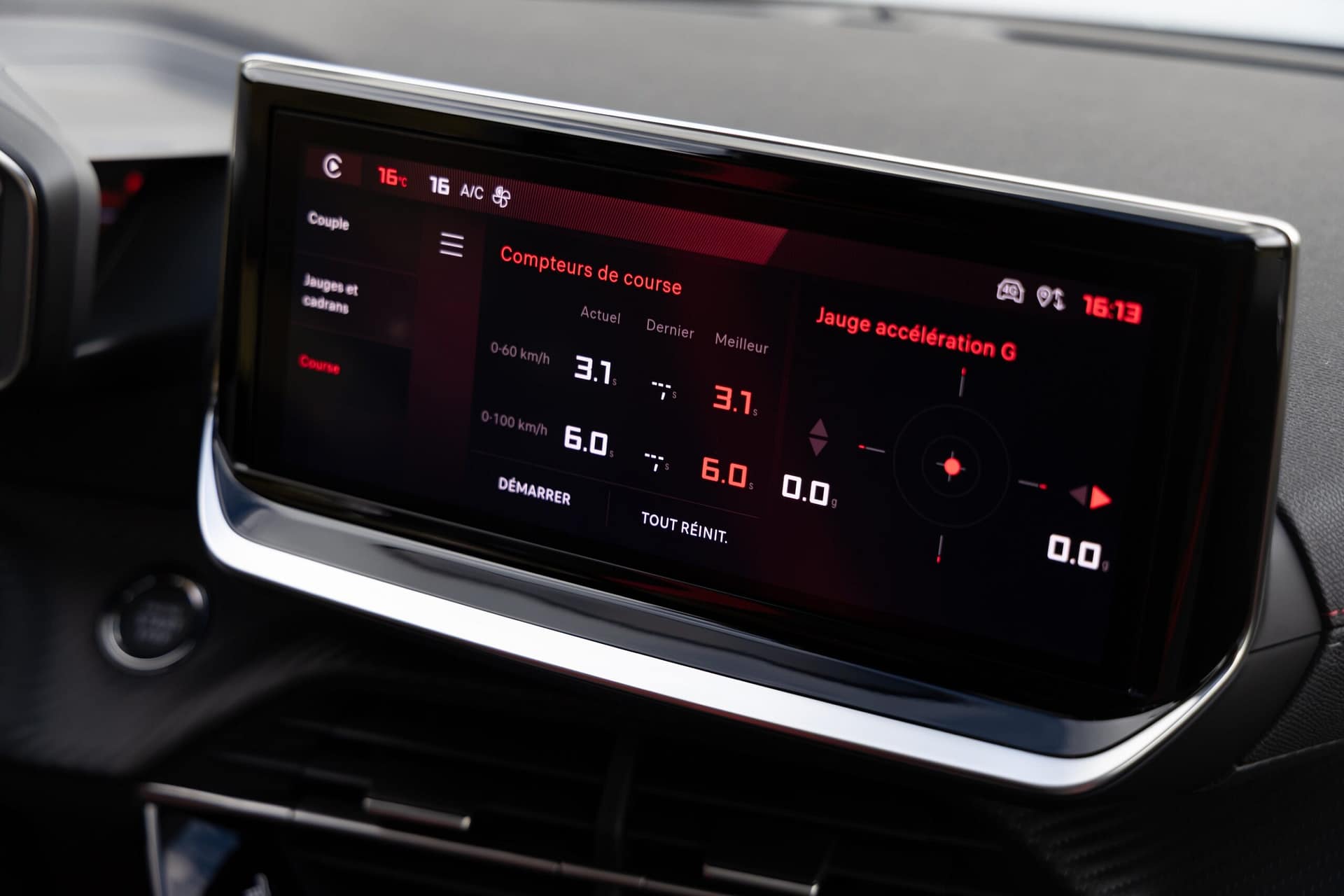
But gone is the high-revving 1.9-litre, 105 bhp petrol engine and in its place sits a front-axle motor that produces 281hp and 345Nm of torque. The result is a 0-62mph time of 5.5 seconds and a top speed of 112mph.
Performance-wise, the electrified model blows its predecessor out of the water, but power is nothing if it feels like an out-of-shape blob through the corners.
“Peugeot Sport’s involvement in this project is immediately noticeable”
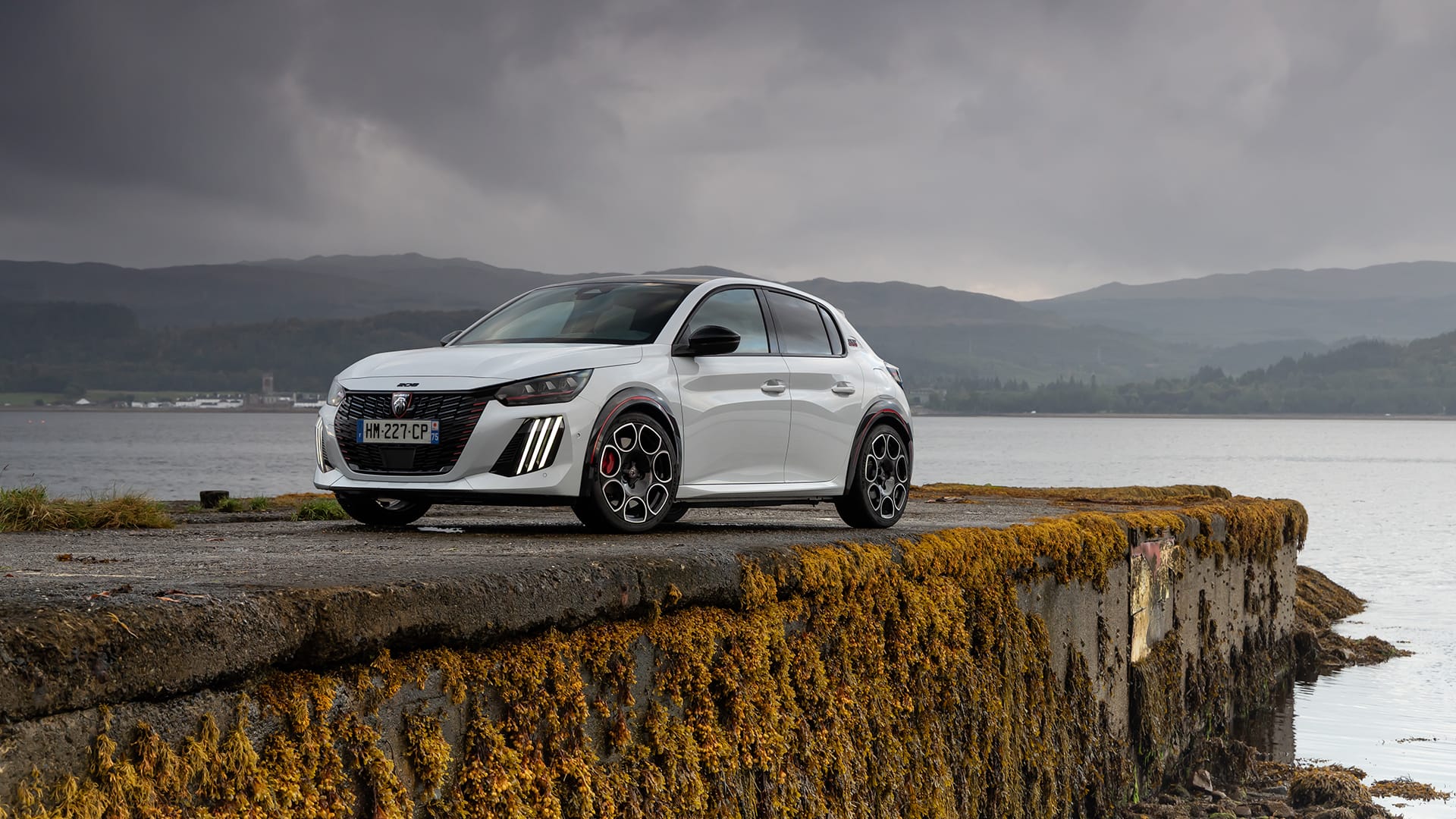
Peugeot says the E-208 GTi offers 182bhp per tonne, which while not quite as featherweight as its GTi badge-wearing forebears, is still a good deal lighter than the majority of chunky electric vehicles found on the market.
But does that mean it deserves to wear the GTi badge? The best way to find out is to point it towards some of the twistiest routes the Scottish Highlands can deliver and spend the day draining the battery in the best way possible.
Racy intentions
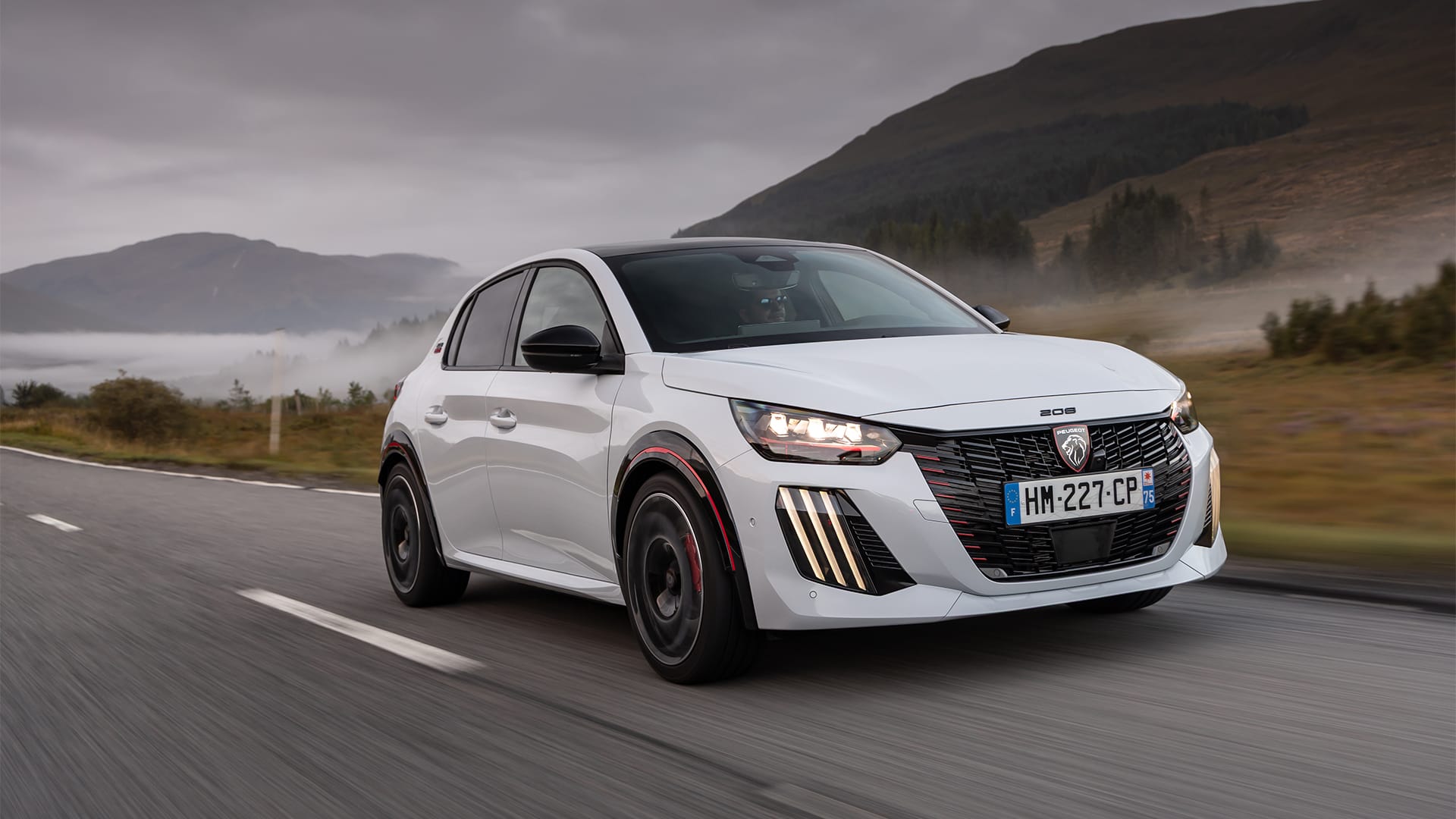
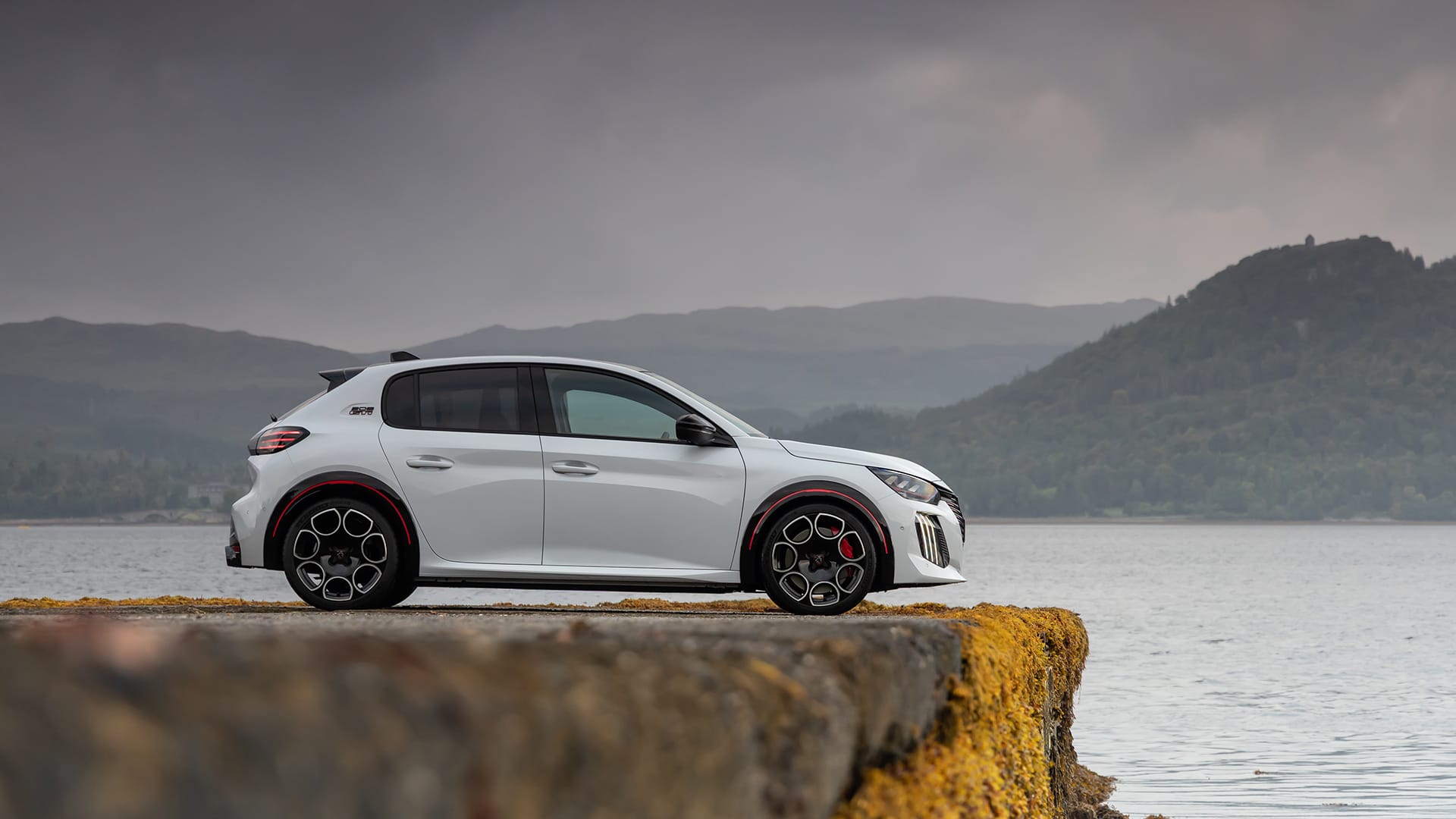
The first thing to note is that Peugeot Sport’s involvement in this project is immediately noticeable. The French marque’s racing team has comprehensively reworked the chassis, lowering the car by 30mm and widening the tracks by 56mm at the front and around 28mm at the rear.
The springs, dampers, steering and anti-roll bars have all been recalibrated, while a mechanical limited-slip differential is integrated into the gear reducer to coral the machine around corners.
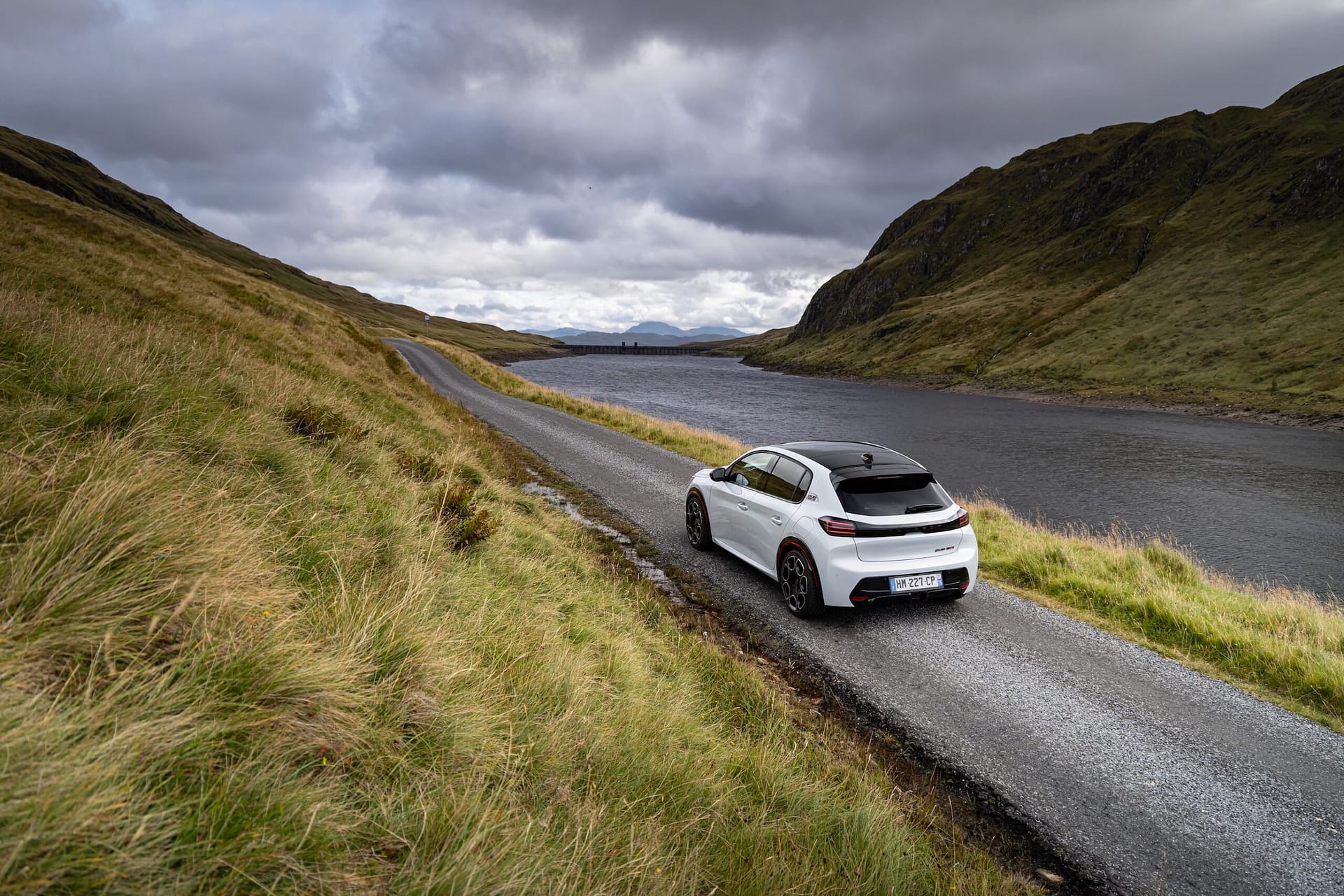
Despite sunlight waning, our first driving experience saw us point the little hot hatch north from our base in Loch Lomond. Being Scotland, the roads were damp but it didn’t take long for the tarmac to become interesting.
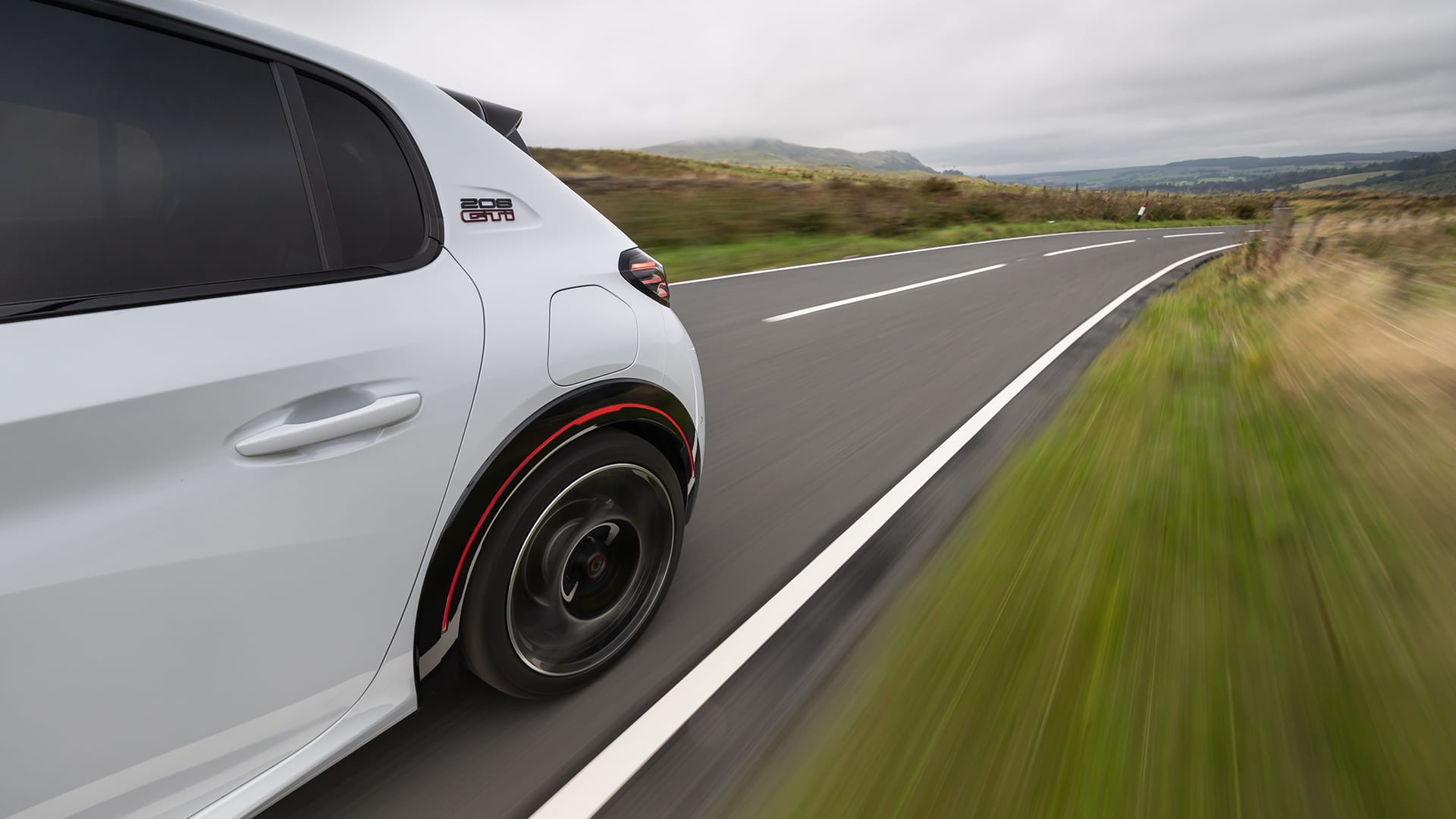
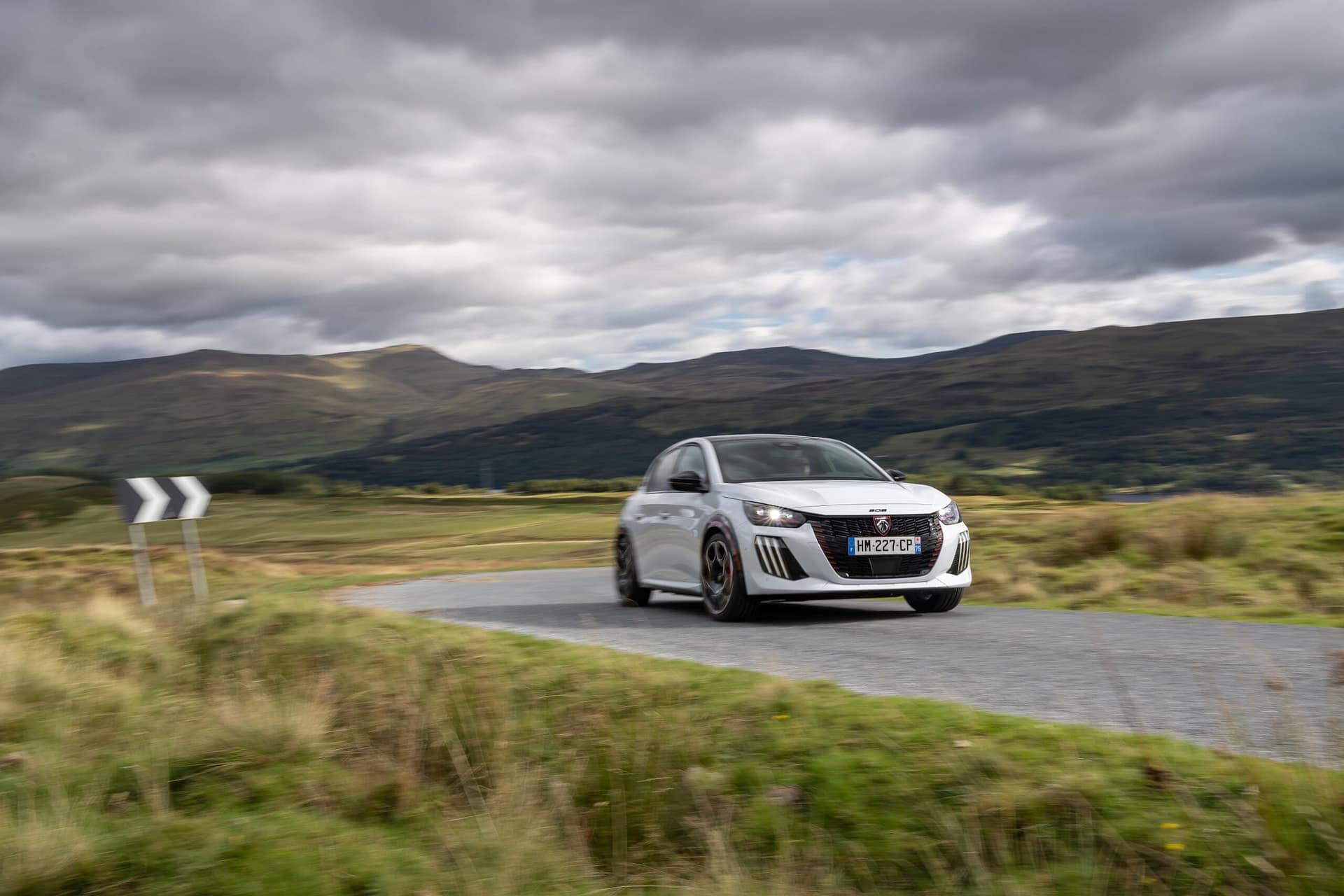
A healthy prod on the accelerator and the E-208 GTi scampers off the line with enthusiasm. It is not Porsche Taycan Turbo levels of neck-snapping acceleration, but the whiff of torque steer and minor loss of traction as the front wheels spin up immediately casts the mind back to the halcyon days of European hot hatchery.
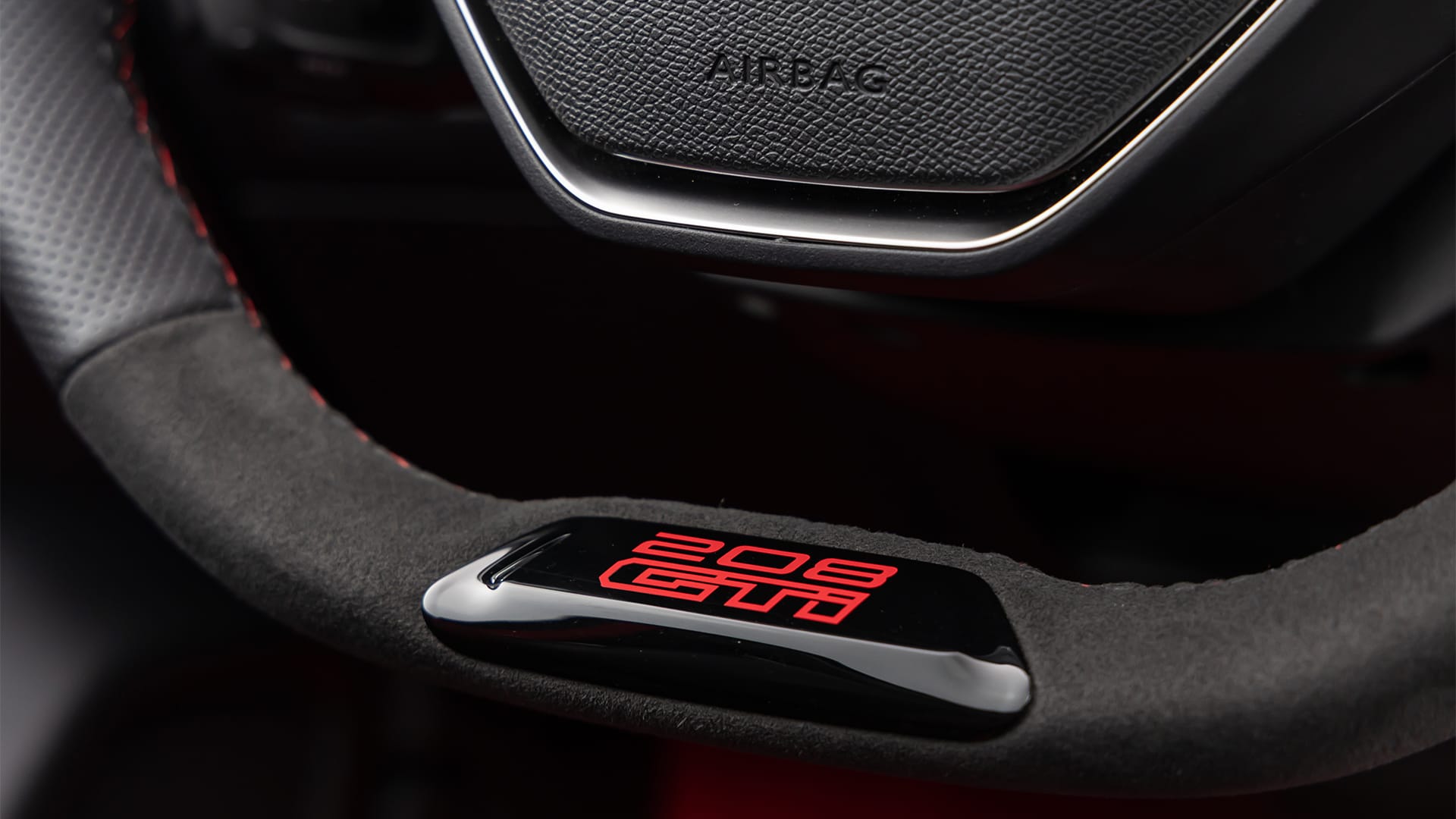
This car wants to tuck into corners with old-school enthusiasm and this, coupled with the tiny, flat-bottomed GTi steering wheel, makes it feel like an eager-to-please go-kart. But there’s depth to it.
To further aid driver involvement, Peugeot Sport didn’t want to muddy the performance waters with vague regenerative braking. So, when Sport Mode is selected, the E-208 GTi relies solely on the hydraulic front 355mm discs and fixed four-piston calipers.
Even during the brief evening drive, the E-208 GTi came alive, tucking into corners and propelling out of them at hysterical speeds.
The brakes inspired tons of confidence, while the limited slip differential and gently intervening traction control are there to keep lead-footed drivers largely out of trouble. You really have to be going some to get it unstuck.
Everyday hero
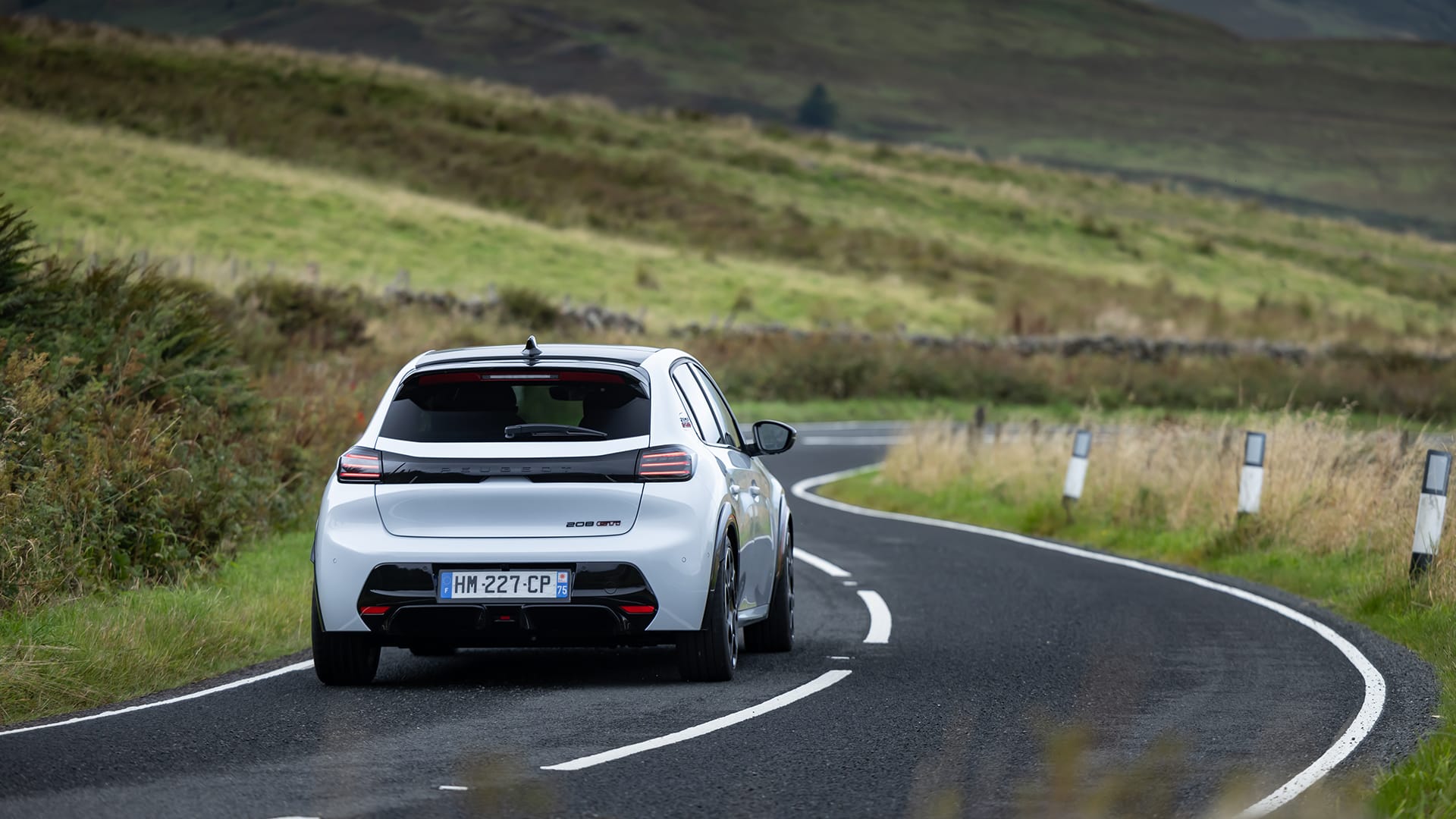
Day two is accompanied by plenty of sunshine and rapidly drying roads. As opposed to the ferocious 40-odd mile rip of the previous night, the second driving session offered up routes to test both the E-208 GTi’s performance credentials and it’s ability to do the everyday stuff.
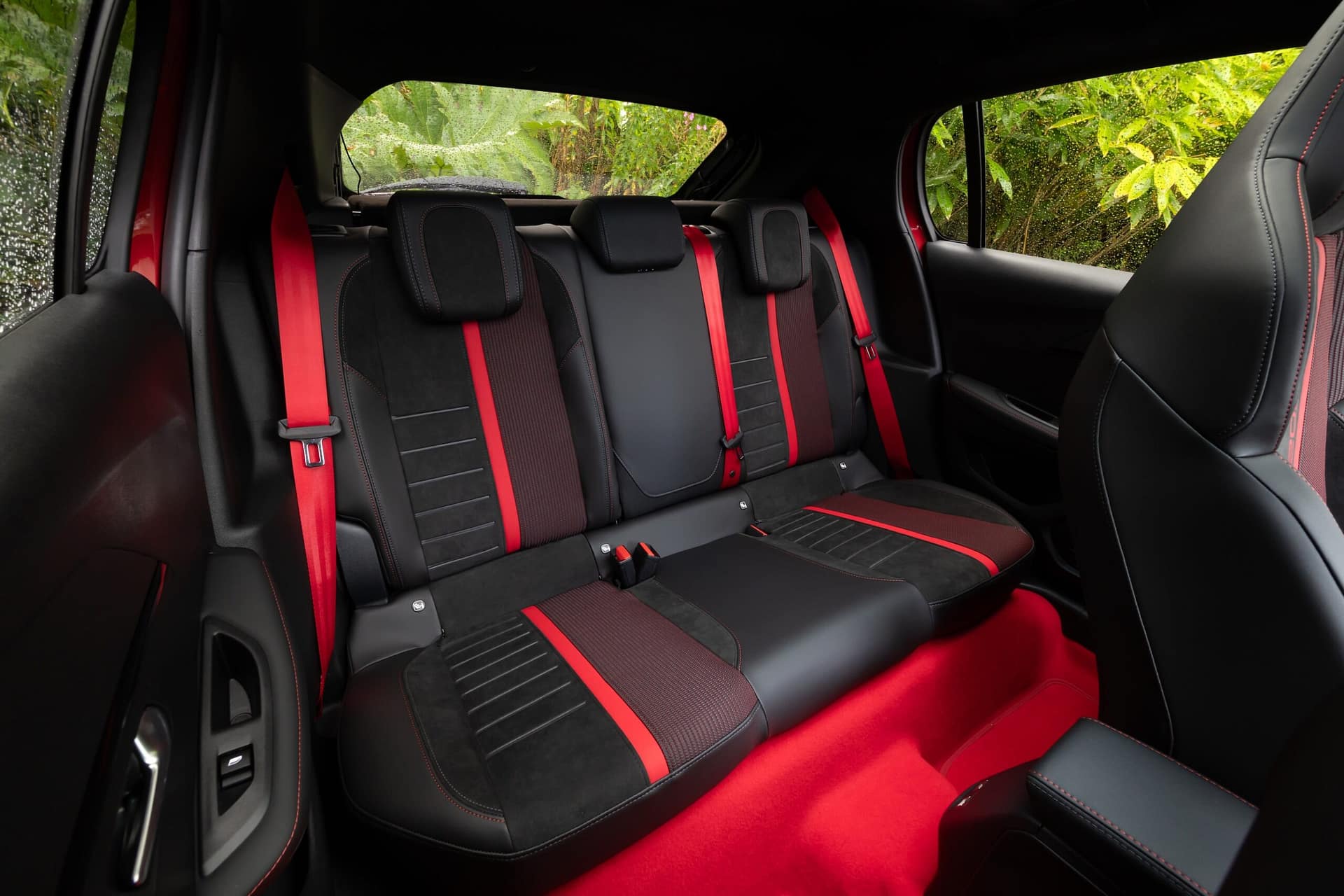
Despite the sports seats and gloriously retro GTi badging throughout the cabin of the warmed-up E-208, this remains a car that can be used everyday. There’s room in the back for two adults, a decent sized boot and all of the infotainment mod cons you could want.
“A healthy prod on the accelerator and the E-208 GTi scampers off the line with enthusiasm”
However, driving like your pants are on fire will seriously eat into the just about respectable 233-mile WLTP range, as some drivers found, returning from the circa 90-mile Scottish route with a mere 5% battery remaining after a full charge. That’s dreadful.
But said drivers likely never took it out of Sport mode, so missed out on any regen braking opportunities. Plus, Peugeot says you won’t have to wait too long to charge it, with a 20-80% session taking less than 30 minutes from a 100kW outlet.
This is in contrast to something like Hyundai’s Ioniq 5 N and 6 N — two equally joyful performance machines that are capable of excellent everyday range, but those can be charged in a matter of minutes thanks to an 800V electrical architecture.
Head to the Nurburgring, where you’ll find Hyundai-branded 350kW chargers, and you can stop for a coffee and lap again in as little as 18 minutes. But you pay for the privilege. There’s always compromise.
Peugeot also doesn’t lean as heavily on the synthesised engine notes, fake gear shifts and manufactured rev limiter, although these are presumably fairly cheap software additions given the £18,000 Honda Super-N features them.
Instead, there is a subtle engine note that’s piped through the speakers, which acts as a soundtrack in Sport Mode. It’s not as booming or in-your-face as Hyundai’s, but does a good job of keeping the EV motion sickness at bay.
In reality, you don’t really need all of the technological gubbins to enjoy the drive. The chassis and suspension are sorted to the point that it’s enough fun pointing it towards a corner, turning in and giggling as it scampers out of the other side.
Thrills without the bills
With prices starting at £34,995 in the UK, the Peugeot E-208 GTi isn’t exactly cheap but it’s nowhere near as expensive as some of the previously mentioned performance EVs. In fact, you’d spend almost double that on a Hyundai Ioniq 5 N.
Regardless, even if the French electric hot hatch doesn’t capture the imagination of diehard GTi fans, it’s a clear indication that legacy manufacturers are willing to take the risk on niche performance EVs and electrified halo models.
If we want to avoid the roads being clogged with generic Chinese rivals, we need embrace the fact that the next generation of conversation-starting hot hatch heroes is going to be electric. And the Peugeot E-208 GTi is a great place to start.
